Loan Program
Construction-to-Permanent Loans
One loan, one closing, from ground-breaking to move-in
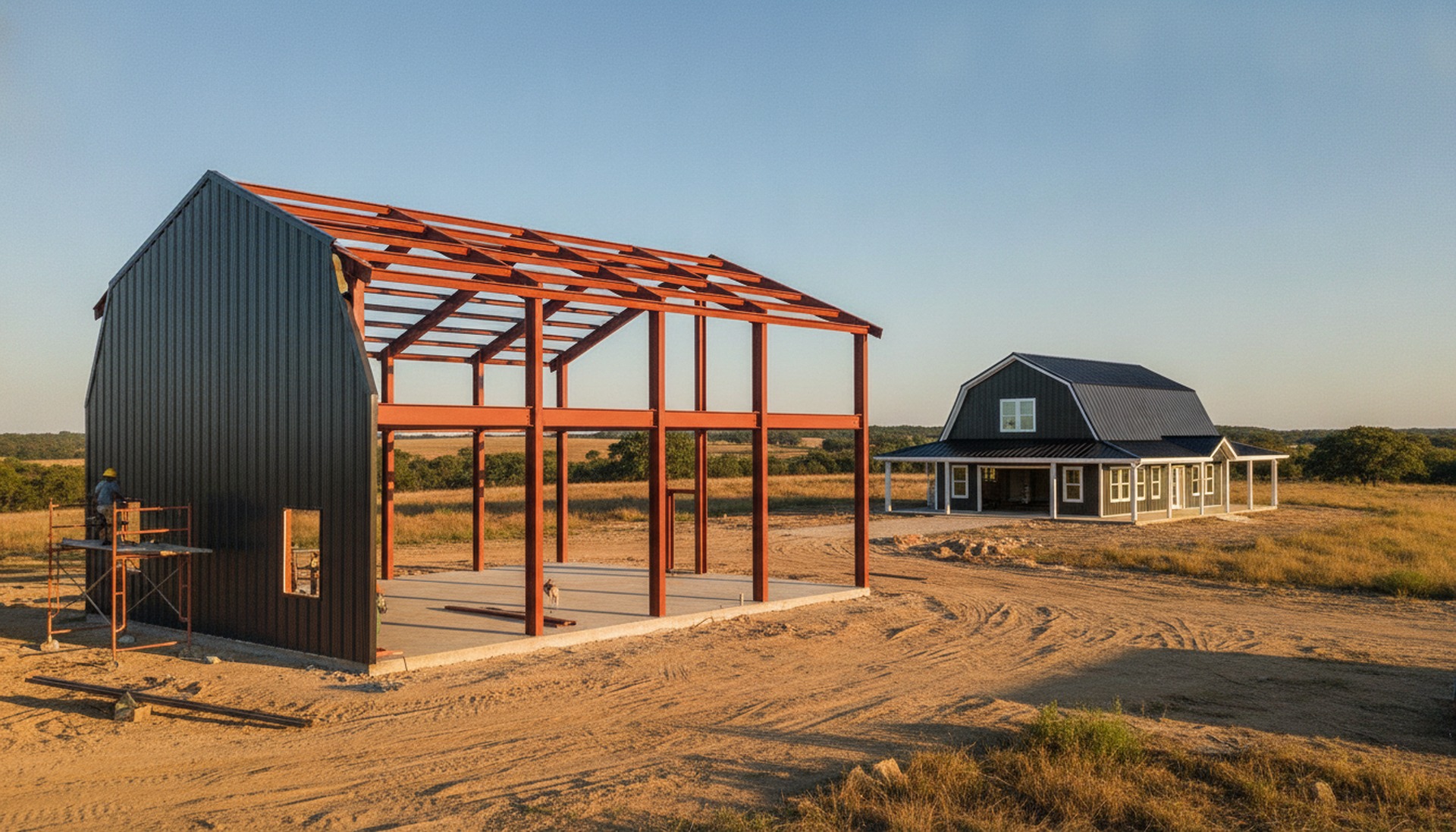
A construction-to-permanent loan for a barndominium automatically converts from a short-term construction loan into a long-term mortgage once the build is finished — a single closing instead of refinancing into a new loan after construction ends.
One closing, ground-breaking to move-in
What's Covered
One loan that carries you all the way through
Single Close vs. Two Closings
The single-closing advantage over a standalone construction loan
A standalone construction loan is short-term by design — it's built to fund the build itself, not to carry you for 30 years afterward. When the barndominium is finished, that loan typically needs to be paid off through a refinance into a separate permanent mortgage: a second application, a second underwriting review, a second appraisal, and a second round of closing costs.
A construction-to-permanent loan skips that second step. It closes once, funds the build in draws just like a standalone construction loan, and then automatically converts into your long-term mortgage once the certificate of occupancy is issued — no second closing, no requalifying against updated income or credit at the finish line, and no exposure to whatever mortgage rates happen to look like on the day construction wraps up.
For a barndominium build specifically — where timelines can run longer than a stick-frame home due to steel lead times or a smaller pool of post-frame subcontractors — reducing the number of times you have to requalify matters more than on a typical build.
Rate Mechanics
How rate-lock mechanics typically work
One of the most valuable — and most program-dependent — features of construction-to-permanent financing is the rate lock. On some programs, your permanent-phase interest rate is set at the initial closing, before a single shovel hits the ground. That means the rate you'll pay once you move in is known from day one, regardless of how rates move during your 9-12 month build.
Other programs float the rate during construction and only lock it closer to conversion, or offer a one-time "float-down" option if rates improve before your build wraps. [Rate-lock terms and float-down options vary by lender and program — confirm directly with the lending partner you're matched with before you break ground].
Either way, understanding which structure your specific program uses — locked upfront vs. floating to conversion — should be one of the first questions you ask, since it directly affects your budget certainty for the life of the loan.
Who It's For
Built for buyers who want certainty locked in early
- Borrowers who want cost and payment certainty locked in from day one
- Buyers who don't want to requalify or reappraise after the build is finished
At a glance
Reduces exposure to rate or qualification changes between the construction phase and permanent financing.
Interest-only payments during the build, then standard amortization automatically once the loan converts.
[Closing costs and rate structures vary by lender — contact us for current program details].
Want one closing from start to move-in?
See if a single-close structure fits your build.
Questions
Construction-to-permanent FAQ
What's the difference between construction-to-permanent and a standalone construction loan?
A standalone construction loan is short-term and typically needs to be refinanced into a separate mortgage once the build is done — a second closing, second set of costs, and a second qualification. A construction-to-permanent loan converts automatically into your long-term mortgage at completion, avoiding that second step.
Are the rates locked before construction starts?
On some construction-to-permanent programs, yes — your permanent-phase rate and terms can be set at the initial closing. This varies by lender, so it's worth confirming directly with the program you're matched with.
What happens if my barndominium costs more to build than expected?
Cost overruns are common in any custom build. Some lenders build in a contingency reserve; others require change orders to be approved and, in some cases, additional funds brought to closing. Discuss overrun handling with your lender before you break ground.
Is a construction-to-permanent loan more expensive than two separate loans?
Not typically — one of the main advantages is paying one set of closing costs instead of two, since you're avoiding the second closing a standalone construction loan requires when it converts to a permanent mortgage. Overall cost still depends on the specific rates and terms your lending partner offers.
What actually triggers the conversion from construction to permanent financing?
Conversion is generally tied to a certificate of occupancy or equivalent final inspection sign-off confirming the barndominium is complete. Once that's in hand, the loan rolls from the interest-only construction phase into standard amortizing payments under its permanent terms.
Related Programs