Loan Program
Owner-Builder Loans
Financing for barndominium builders acting as their own general contractor
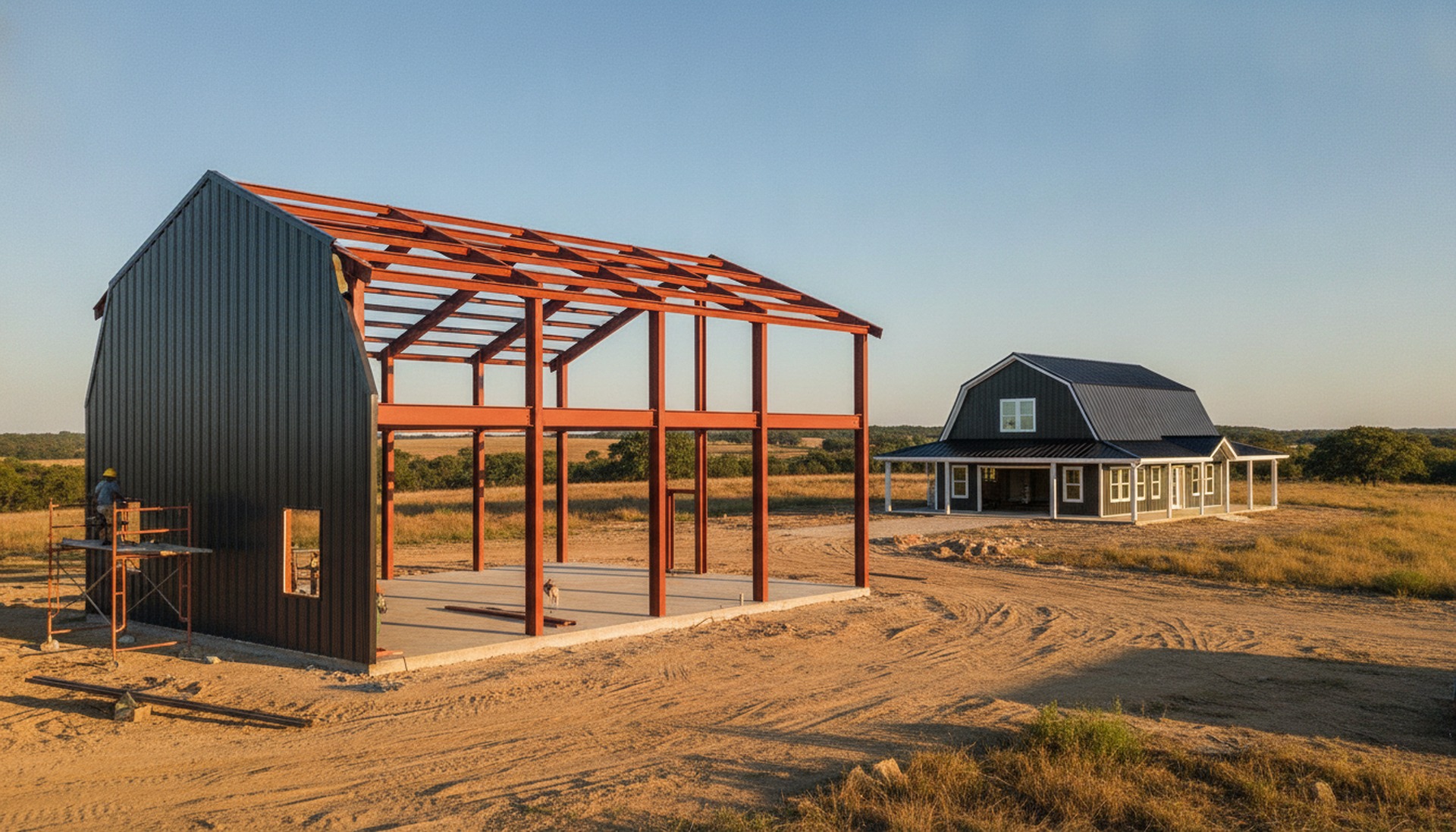
Owner-builder financing is built for borrowers who plan to act as their own general contractor on a barndominium build — managing subcontractors, materials, and scheduling directly rather than hiring a single licensed builder to run the whole project.
Structured for borrowers managing their own build

What's Covered
Financing built around self-managed construction
Underwriting
What lenders typically look for in an owner-builder application
When you're your own general contractor, the lender is underwriting two things instead of one: your financial qualification, and your ability to actually deliver the project on budget and on schedule without a licensed GC standing behind it. That second piece is what makes owner-builder applications more selective than a standard construction loan.
Most programs weigh some combination of the following:
- Relevant construction, trades, or project-management experience — prior owner-builds, a trades background, or hands-on management of similar projects
- A detailed, itemized budget broken out by phase (foundation, structural, mechanical, finish-out) rather than a single lump-sum estimate
- A realistic project timeline that accounts for material lead times and seasonal weather
- A subcontractor plan — bids, quotes, or signed agreements for the trades you won't perform yourself
- A contingency reserve for cost overruns, since there's no GC absorbing that risk on your behalf
A thin or vague plan is the most common reason an owner-builder file gets declined or sent back for more documentation — the more specific your budget and subcontractor plan, the smoother underwriting tends to go.
Draw Inspections
Draw inspections when there's no single GC
On a standard construction loan, a licensed general contractor typically certifies that a draw stage is complete, and the lender leans partly on that certification. Without a single GC in that role, owner-builder programs usually shift more of the verification burden onto direct site inspections.
In practice, that often means more frequent inspections tied to specific completed work — a third-party inspector or draw administrator visiting the site to confirm the foundation is poured, the frame is dried in, or rough-in is complete — rather than releasing funds off a GC's word alone. Some lenders also require photo documentation or invoices from each subcontractor before releasing that portion of a draw.
This isn't meant to slow you down — it's how a lender manages risk on a build where no single licensed party is contractually on the hook for the whole project. Borrowers who keep organized records and communicate proactively with their draw inspector generally move through this process without friction.
Who It's For
Built for hands-on builders
- Borrowers with construction, trades, or project-management experience who want to manage their own build
- Landowners working with a mix of subcontractors rather than a single general contractor
At a glance
A detailed budget, timeline, and subcontractor plan strengthens your application regardless of experience level.
Draw schedules are structured around owner-managed subcontractor work, with inspection cadence set by the lender.
[Experience requirements and down payment ranges vary by lender — contact us to see which programs fit your background].
Managing your own build?
Tell us about your plan and experience.
Questions
Owner-builder loan FAQ
Do I need construction experience to qualify as an owner-builder?
Many lenders prefer or require some construction, trades, or project-management background, though requirements vary significantly by program. A detailed budget, timeline, and subcontractor plan strengthens an owner-builder application regardless of your background.
Can I use a mix of subcontractors instead of one general contractor?
Yes — that's the core structure of owner-builder financing. You're approved to manage and coordinate subcontractors directly instead of hiring a single licensed general contractor to run the project.
Is owner-builder financing harder to get approved for than a standard construction loan?
It can be more selective, since the lender is underwriting your ability to manage the build in addition to your financial qualifications. A clear plan, realistic budget, and any relevant experience all help.
Can I hire a general contractor for part of the project and self-manage the rest?
In many cases, yes — some owner-builder programs allow a hybrid structure where a licensed contractor handles specific phases (like the steel or post-frame erection) while you manage the remaining subcontractors and finish-out work directly. Availability of this structure depends on the specific lender and program.
Do owner-builder loans require any licensed contractor involvement at all?
It depends on the program. Some require a licensed contractor for structural or code-critical phases even under an owner-builder structure, while others allow a fully self-managed build. This is one of the first things to confirm with the lender you're matched with, since it directly affects how your draw schedule and inspections are set up.
Related Programs